Forget the Controller: How Indie Devs Are Reinventing the Way You Touch a Game
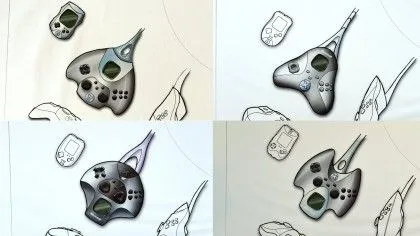
Photo: unusual game controller experimental hardware indie developer, via cdn.mos.cms.futurecdn.net
There's a moment in most gaming sessions where your hands just know what to do. Thumb on the left stick, index finger hovering over the trigger, muscle memory running the whole show. It's comfortable. It's efficient. And for a certain breed of indie developer, it's exactly the problem.
A quiet but persistent rebellion is happening at the edges of game design, and it has nothing to do with graphics engines or monetization models. It's about the most physical, immediate layer of play — how your body actually talks to the game. Indie developers are ditching standard input methods not because they can't afford licensed controller support, but because they've decided that the traditional gamepad is a creative cage.
The Gamepad as Ideology
When you think about it, the modern controller layout is a set of assumptions baked into silicon. Two analog sticks, a cluster of face buttons, shoulder triggers — it's a design that evolved to serve a specific kind of game: the action game, the sports title, the shooter. That layout works beautifully for those genres. But it also quietly tells every developer: build something that fits this hand.
For a lot of indie creators, that's an invitation to do the exact opposite.
Games like Orwell, which had players digging through digital files and flagging surveillance data using nothing but a mouse and a text interface, made the input itself part of the meaning. You weren't pressing a button to spy on someone — you were literally clicking through their personal documents. The discomfort of that interaction was the point. A controller would have buffered that feeling. The mouse, clicking through folders like you're doing something you probably shouldn't, made it land harder.
Then there's the whole lineage of text-parser games that never really went away. Modern titles like Zork-influenced indie releases and newer experiments in interactive fiction ask players to type what they want to do. No button prompts, no UI hints. Just a blinking cursor and your own vocabulary. It sounds archaic, but players who've spent time with these games often describe them as some of the most immersive experiences they've had — precisely because the interface disappears and the imagination fills the gap.
Constraint as Creative Fuel
Here's the thing about weird input methods: they force both the developer and the player to think differently. When you remove the shorthand of a standard controller, you also remove a whole vocabulary of game design assumptions. You can't just port in a dodge roll or a jump mechanic. You have to build something that actually fits the input you've chosen.
Developer Bennett Foddy's work is a good reference point here. Getting Over It with Bennett Foddy used a mouse to control a hammer, and the awkwardness of that control scheme was inseparable from the game's entire philosophical argument about frustration and persistence. A traditional controller would have smoothed out the friction. The mouse kept it raw and weird and real.
Motion controls offer a similar kind of creative pressure. When indie studios experiment with gyroscope-based input — leaning on the motion capabilities in Joy-Cons or mobile accelerometers — they're not just adding a novelty layer. They're committing to a different relationship between player body and game world. Games built around motion from the ground up feel fundamentally different from games where motion was tacked on as a feature. The best ones make you feel a little ridiculous and completely absorbed at the same time.
The Hardware Experimenters
Some developers have gone further than software can take them. The indie and art-game spaces have produced controllers made of cardboard, games played through a telephone receiver, experiences that use a microphone as the only input. These aren't commercial products targeting mainstream shelves — they're arguments. Arguments that the relationship between human and game doesn't have to be mediated by a $70 piece of plastic that looks roughly the same as it did in 2006.
Game jams have become a hotbed for this kind of experimentation. Events like the Shake That Button jam specifically challenge developers to build games for unusual controllers — arcade sticks, dance pads, custom-built hardware. What comes out of these events is often rough, sometimes barely functional, and almost always more interesting to think about than whatever the top-selling title on Steam is doing that week.
The accessibility angle matters here too, even if it doesn't always get framed that way. When developers question what "standard" input looks like, they sometimes stumble into designs that work better for players with disabilities, players who don't have a traditional gaming setup, or players who just interact with the world differently. Rebellion and inclusion aren't always opposites.
Why This Matters for the Rest of Us
You don't have to seek out art installations or jam games to feel the influence of input experimentation. It trickles into mainstream indie releases in smaller ways — a game that lets you play entirely with one hand, a puzzle title built around keyboard-only navigation, an RPG where dialogue choices are made by speaking out loud.
Every time a developer asks "what if we didn't use a controller for this," they're cracking open a door. Most players will never walk through it. But the fact that it's open changes what's possible on the other side.
The standard controller isn't going anywhere. It's too useful, too familiar, too deeply embedded in how we think about games. But that's exactly why the developers who refuse it are doing something worth paying attention to. They're not just making games that feel different. They're making games that make you think about why everything else feels the same.
And honestly? Sometimes the most rebellious thing a game can do is make you put down the controller and pick up something stranger.