8-Bit Is a Choice: How Pixel Art Became Indie Gaming's Most Defiant Language
The first thing you need to understand is that nobody making pixel art games today is doing it because they don't know better.
They have access to Unity. They've seen Unreal Engine 5's Nanite technology render individual blades of grass with photorealistic fidelity. They know what a modern GPU can do. They've watched the trailers for the big-budget titles with their motion-captured facial animations and HDR lighting rigs.
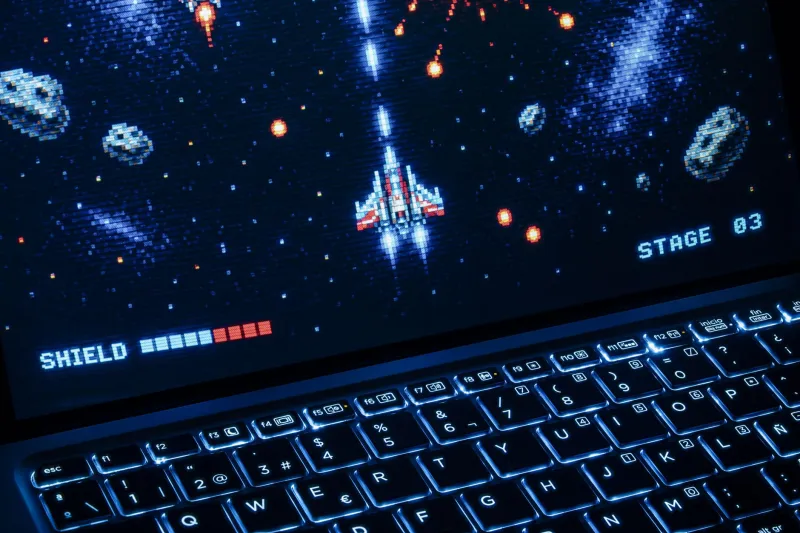
And then they opened Aseprite and started drawing tiny sprites, one pixel at a time. On purpose.
The Illusion of Limitation
The dominant narrative around retro aesthetics in indie gaming tends to frame pixel art as a workaround — a budget-conscious choice made by small teams who can't afford 3D artists or high-fidelity asset pipelines. And sure, for some developers, the economics absolutely play a role.
But reduce it entirely to cost-cutting, and you miss what's actually happening philosophically.
When Shovel Knight launched in 2014, Yacht Club Games didn't just make a game that looked old — they made a game that thought old, that engaged with NES-era design principles deliberately and lovingly, using constraint as a creative framework rather than a compromise. When Undertale shipped a year later with graphics that would have looked modest even on the Super Nintendo, Toby Fox was making an aesthetic argument: that the emotional weight of a game has nothing to do with its polygon count.
These weren't limitations. They were positions.
Chiptune as Counterculture
The audio dimension of this conversation deserves its own spotlight. The chiptune soundtrack — those bright, buzzy, synthesized compositions built from oscillators and waveform generators — carries a specific emotional frequency that orchestral scores and licensed indie rock simply cannot replicate.
Part of that is pure nostalgia, obviously. For millennial gamers who grew up with a Game Boy or an NES, chiptune sounds like childhood. It's a direct line to a pre-algorithmic relationship with games, before the engagement loops and the monetization layers.
But it's also just distinctive. In a marketplace where every other action game has a sweeping Hans Zimmer-adjacent score, a chiptune soundtrack stands out immediately. It signals something before a single frame of gameplay has loaded: we do things differently here.
Composers like Disasterpeace (FTL, Hyper Light Drifter) and Lena Raine (Celeste) have elevated chiptune and chiptune-adjacent music into genuinely sophisticated artistic territory, proving that working within the sonic constraints of early gaming hardware — or simulating those constraints — produces something with a character and warmth that more "advanced" composition tools often can't match.
Weaponizing Nostalgia
Here's where the retro aesthetic gets genuinely subversive: it doesn't just evoke the past, it critiques the present.
When an indie developer releases a pixel art game in 2024, the implicit comparison to the AAA landscape is unavoidable. The contrast between a $70 open-world blockbuster with a thousand-person development team and a $15 pixel art RPG made by two people in their spare time says something about value, about creativity, about what games actually need to be meaningful.
Some developers lean into this contrast explicitly. The marketing around games like Sea of Stars and Cassette Beasts positions their retro aesthetics not apologetically but proudly — as proof that great games don't require nine-figure budgets and corporate approval chains. The pixel art isn't a limitation. It's the point.
There's also something politically interesting in the choice to build games that look like they belong to an era before gaming became a $200 billion industry. It's a visual argument that the medium's soul lives somewhere other than on the balance sheets of publicly traded corporations.
The Craft Is Real
One misconception worth dismantling: pixel art isn't easier than high-fidelity 3D art. It's just different, and in some ways considerably harder.
Good pixel art requires an intimate understanding of color theory, readability, and visual hierarchy — because when you're working at 16x16 or 32x32 resolution, every single pixel is load-bearing. There's no room to hide sloppy work behind texture resolution or normal maps. The craft is completely exposed.
Artists like the team behind Octopath Traveler or the solo developer behind Eastward have pushed pixel art into territory that genuinely defies easy categorization — work that's simultaneously retro in its visual language and entirely contemporary in its sophistication. Calling this stuff "old-school" misses the point. It's a living artistic tradition with its own evolving vocabulary.
Why the AAA Industry Can't Copy This
Here's the thing that makes retro aesthetics genuinely subversive rather than just stylistically distinctive: the major studios can't authentically replicate it.
Oh, they've tried. There have been pixel art offerings from big publishers, retro-styled mobile games with corporate fingerprints all over them. They tend to land with a thud. Because the retro aesthetic isn't just a visual layer you can apply to any game — it's an expression of a development philosophy, a relationship between creator and medium, that requires genuine commitment to function.
When a solo developer spends two years hand-animating pixel art sprites for a game about grief and memory, the aesthetic and the content are inseparable. When a AAA publisher slaps a pixel filter on a game designed around a battle pass, the inauthenticity is immediately legible.
Retro aesthetics work as rebellion precisely because they can't be easily co-opted by the entities they're rebelling against.
Still Drawing Pixels
The indie developers choosing chiptune soundtracks and sprite-based graphics in 2024 aren't looking backward. They're using the visual language of gaming's past to say something about gaming's present — and to build something that exists outside the industry's relentless push toward bigger, louder, more expensive, more demanding.
Every pixel is a choice. And right now, that choice feels more loaded with meaning than ever.