Offline and Unbothered: Single-Player Gaming Is the New Counterculture
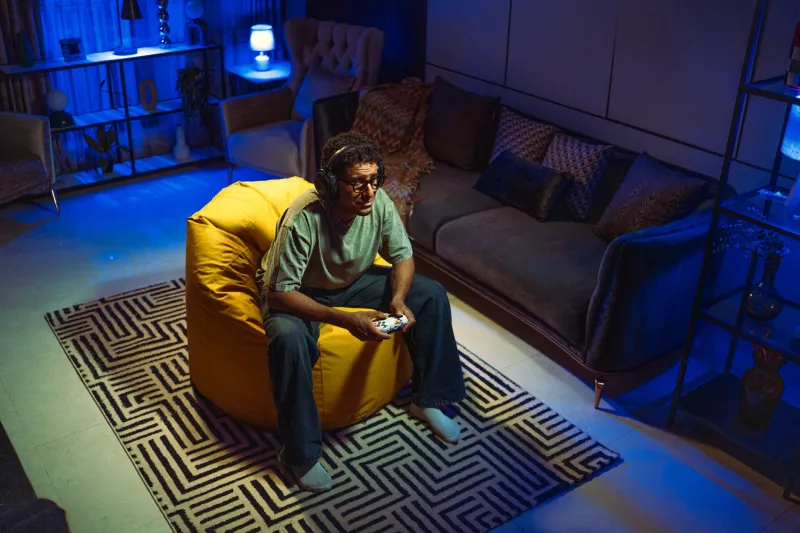
There's a particular kind of freedom in booting up a game and knowing nobody else is watching your K/D ratio. No season pass ticking down. No friends list lighting up with passive-aggressive "are you playing tonight?" notifications. Just you, a controller, and a world that runs entirely on your schedule.
That might sound like a pretty basic description of gaming circa 2005. But in 2024, choosing to play single-player games exclusively — or even just preferring them — has quietly become a countercultural act.
The Live-Service Industrial Complex
Let's be honest about what the dominant gaming industry has been selling for the past decade. Games-as-a-service, battle passes, seasonal content drops, daily login bonuses — these aren't features designed to make your experience better. They're retention mechanics. Psychological hooks engineered to keep you engaged not because the game is good, but because the business model needs you logged in.
Fortunite didn't invent this. But it perfected the formula, and the ripple effect reshaped expectations across the entire industry. Suddenly, even games that had no business being online — looter shooters, action RPGs, survival crafting games — came packaged with live-service elements that demanded your continuous attention.
The message was clear: a game you finish is a game you stop spending money on.
Logging Off as a Political Statement
Here's where it gets interesting. The players who've been quietly retreating into single-player experiences aren't just doing it out of nostalgia or introversion. A growing number of them are doing it deliberately, consciously rejecting the engagement-maximization loop that defines so much of mainstream gaming.
Look at the conversation happening on subreddits, Discord servers, and gaming forums across the US right now. People aren't just recommending single-player games — they're celebrating them with an almost evangelical energy. Completing a narrative-driven indie game has become something worth talking about, worth sharing, worth feeling proud of in a way that hitting a battle pass tier never quite managed.
There's a reason "I finished a game" has become its own kind of flex. In a media landscape designed to be endless — streaming queues that never empty, social feeds that never stop scrolling, multiplayer games that literally never conclude — finishing something is genuinely countercultural.
Indie Developers Are Reading the Room
The indie scene has always been ahead of the curve on this one. While major studios were chasing live-service revenue models, smaller developers kept building contained, completable experiences. Games like Disco Elysium, Celeste, Hades, and Pentiment aren't just critically acclaimed — they're beloved precisely because they have endings. They respect your time enough to conclude.
These games don't ask you to grind. They don't punish you for taking a week off. They don't send you push notifications. They just sit there, patiently, waiting for you to come back at your own pace. And when you're done? They're done too. Clean. Satisfying. Whole.
That wholeness is increasingly rare, and indie developers know it. Many have leaned into it as a selling point — marketing their games specifically as "no live service," "no microtransactions," "a complete experience." These aren't just disclaimers anymore. They're value propositions.
The Burnout Factor
Another piece of this puzzle is gaming burnout, which hit hard during and after the pandemic years. A lot of American gamers spent enormous chunks of 2020 and 2021 deep inside live-service ecosystems — grinding Destiny 2, chasing Apex Legends ranked points, logging daily hours in Animal Crossing — and came out the other side feeling weirdly hollow.
The games had kept them busy. But busy isn't the same as fulfilled.
Single-player games, particularly story-driven ones, offer something the engagement loop fundamentally cannot: a reason to care that isn't manufactured by a FOMO-based reward calendar. You care about the characters. You care about the world. You care about what happens next, not because a timer is running out, but because the storytelling is actually working on you.
That emotional investment is increasingly what players are chasing — and increasingly what they're finding only outside the live-service ecosystem.
Playing on Your Own Terms
There's also something worth naming about autonomy. Live-service games are, by design, environments where the developer holds enormous power over your experience. Patches change the meta overnight. Content gets vaulted. Servers go down. The game you fell in love with last year might be unrecognizable — or literally unplayable — today.
Single-player games, especially those without always-online requirements, belong to you in a way that live-service titles simply don't. You can play them in airplane mode. You can revisit them five years from now. You can mod them, replay them on a different difficulty, or just let them sit on your shelf as a completed thing you once did.
Ownership. Completion. Autonomy. These feel like radical concepts in the current gaming landscape, which is kind of wild when you think about it.
The Rebellion Isn't Going Anywhere
The single-player resurgence isn't a blip. It's a sustained pushback from players who've figured out that their time and attention are finite resources — and that not every game deserves unlimited access to both.
And the market is responding. Major studios that once dismissed single-player as a dying format have quietly reversed course. Sony's first-party lineup has leaned heavily into narrative single-player experiences. Microsoft acquired studios specifically for their single-player pedigree. Even within the live-service space, there's growing demand for "offline modes" and "story modes" that let players engage without the perpetual commitment.
But the real energy? It's still in the indie space. It's in the developers building tight, weird, personal games that you can complete in a weekend and think about for months afterward. It's in the players choosing those games over whatever the algorithm is pushing this week.
Logging off has never felt more like a power move.