The Empty Page: How Some Indie Games Are Handing the Story Back to You

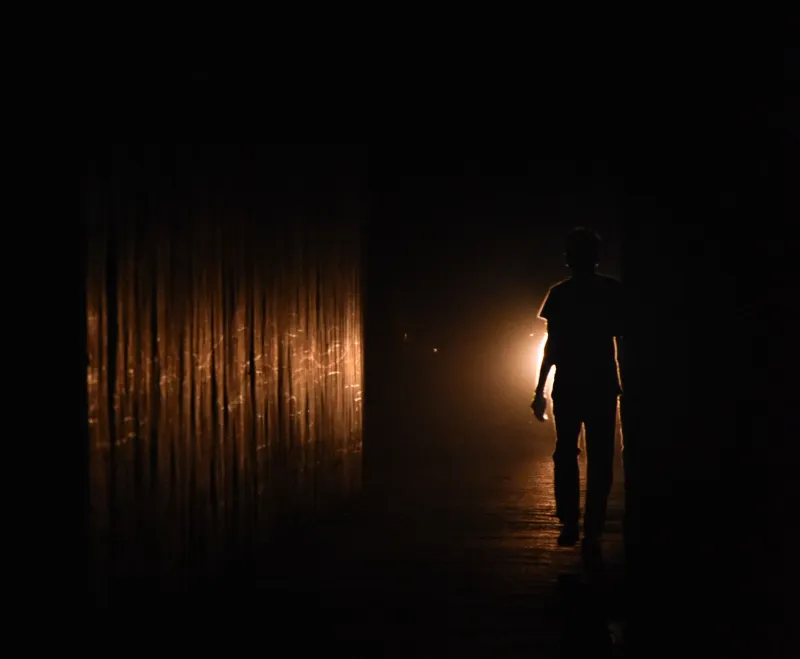
Photo: empty mysterious room atmospheric lighting exploration, via img.freepik.com
Let me paint you a picture. You've been playing a big-budget RPG for about four hours. You've watched maybe forty-five minutes of cutscenes. A gravelly-voiced mentor has explained the prophecy twice. A loading screen tip reminded you that the villain was once a good person. You know exactly how you're supposed to feel about everything that's happening.
Now imagine a different game. You walk into a room. There's a chair knocked over. A cup of coffee on the table, still warm — at least, the steam rising from it implies that. A window with the curtain pulled halfway. No music. No narrator. No text box. Just you, the room, and whatever story your brain starts assembling from the pieces.
That second experience is what a growing movement in indie game design is betting on. And it's a bet that's paying off.
Silence as a Design Choice
The idea of environmental storytelling isn't new. Dark Souls built a cult around item descriptions and architectural detail. Gone Home let a house do the talking. But what's happening now feels more radical — not just games that tell stories through environments, but games that refuse to tell a story at all, leaving the entire interpretive project to the player.
This isn't laziness or a budget shortcut. It's a philosophical position. Developers who build narrative-free or narrative-light experiences are making a deliberate argument: that meaning-making is more powerful when it comes from the player, not the game.
There's real intellectual weight behind this. In literary theory, there's a concept called "the death of the author" — the idea that once a work is out in the world, the creator's intentions become less important than how readers interpret it. Most AAA game design works in the exact opposite direction, fighting hard to control your interpretation, to make sure you feel sad at the right moment and triumphant at the right other moment. Narrative-free indie games are doing something closer to what experimental literature has been doing for decades: trusting the audience.
What Players Are Actually Doing With the Space
Here's where it gets genuinely interesting. When you remove explicit narrative scaffolding, players don't experience nothing. They experience something more personal and often more intense than what a scripted story would have delivered.
Take Proteus, the 2013 indie game that dropped you on a procedurally generated island with no objectives, no story, no enemies, no win condition. Just sound, color, and wandering. Players brought wildly different interpretations to it — some read it as a meditation on mortality, others as pure sensory exploration, others as an ambient toy. The game didn't tell anyone they were wrong, because it never told anyone anything.
Or look at what happens in communities around games like Outer Wilds — which does have narrative elements, but buries them so deep in environmental archaeology that players essentially reconstruct the story themselves. The forums and subreddits around that game read like collaborative detective work. People aren't just sharing what happened; they're building meaning together, comparing notes, arguing about what things mean. That's a fundamentally different relationship to a game's story than watching a cutscene.
The Exhaustion Factor
There's also something honest to say about player fatigue. After decades of games that treat every quiet moment as an opportunity to insert exposition, a lot of people are just tired. Tired of being told how to feel. Tired of dialogue trees that all lead to the same place. Tired of games that mistake volume of story content for depth of story.
Narrative-free design offers a different kind of rest. Not the absence of meaning, but the absence of someone else's meaning being pushed at you. It's the gaming equivalent of a long walk where you don't have to talk to anyone.
For players who came up on games that respected their intelligence — who remember when a game's world could be mysterious because it genuinely didn't explain itself — this movement feels like a homecoming. For younger players who've grown up in the era of fully voiced, motion-captured, cinematic game experiences, it can feel revelatory. A reminder that their imagination is still the most powerful tool in the room.
What Developers Are Risking
This approach isn't without real stakes. Games without explicit stories are notoriously hard to market. "There's no plot but the vibes are immaculate" doesn't fit neatly into a Steam description. Critics sometimes struggle to engage with them using traditional review frameworks. And a segment of players will always bounce off experiences that don't give them clear direction.
Developers who go this route are betting that the players who connect with their work will connect deeply enough to make the risk worthwhile. They're often right, but it's not a safe bet. It requires confidence in your craft and a willingness to let go of the game once it's out — to let it become whatever it becomes in the hands of players.
That's a kind of creative courage that's genuinely rare. It's also, not coincidentally, the kind of courage that tends to produce the most memorable work.
Meaning Is More Fun When You Make It
The best argument for narrative-free indie games isn't an academic one. It's experiential. Play one of these games seriously, give it real attention, and notice what happens in your head. Notice the stories you start telling yourself. Notice how invested you get in interpretations you arrived at on your own.
Then go back to a game that explains everything, and notice how different that feels. How passive. How much like being read to.
Both experiences have value. But the indie developers who are deliberately leaving the page blank are doing something brave and weird and worth supporting. They're trusting you with the best part of storytelling — the part where you make it yours.